5 Jun 2026
Charting Rapid Payout Routes in App-Driven Live Casino Environments Open to UK Participants

App-driven live casino platforms have integrated multiple payment rails that allow participants in the UK to move funds in and out of their accounts while sessions remain active, and data from industry reports shows these systems rely on real-time banking APIs combined with secure tokenisation to verify and complete transfers within minutes rather than hours.
Operators design these routes around established protocols such as the Faster Payments Service alongside digital wallet connections, which means withdrawal requests triggered from within a live dealer game can route directly to a user's linked bank account without requiring a separate desktop login or manual verification step each time.
Core Mechanics Behind Instant Cash Flow
Live casino applications maintain separate ledgers for gameplay balances and withdrawal queues, so when a player cashes out mid-session the app pushes the request through an automated compliance check that cross-references recent deposits against current play data before releasing funds, and observers note this layered approach reduces processing delays while satisfying regulatory record-keeping standards.
Payment service providers embed their SDKs directly into casino apps, which enables the interface to display estimated arrival times based on the chosen rail, whether that is an e-wallet instant transfer or a next-day bank credit, and figures from transaction analytics firms indicate average completion windows have shortened consistently over the past three years.
Integration Patterns Across Popular UK-Accessible Apps
Many platforms that host live roulette, blackjack and baccarat tables now embed payout dashboards inside the mobile experience itself, allowing users to monitor pending transfers without leaving the game lobby, while the backend systems synchronise with banking partners every few seconds to confirm cleared funds and update status indicators in real time.
Regional licensing requirements influence which rails receive priority, and developers adjust their routing logic accordingly so that UK participants encounter familiar domestic options such as open banking transfers alongside internationally recognised wallets, and one study revealed that apps optimised for these preferences recorded higher session retention rates compared with those offering only legacy card methods.
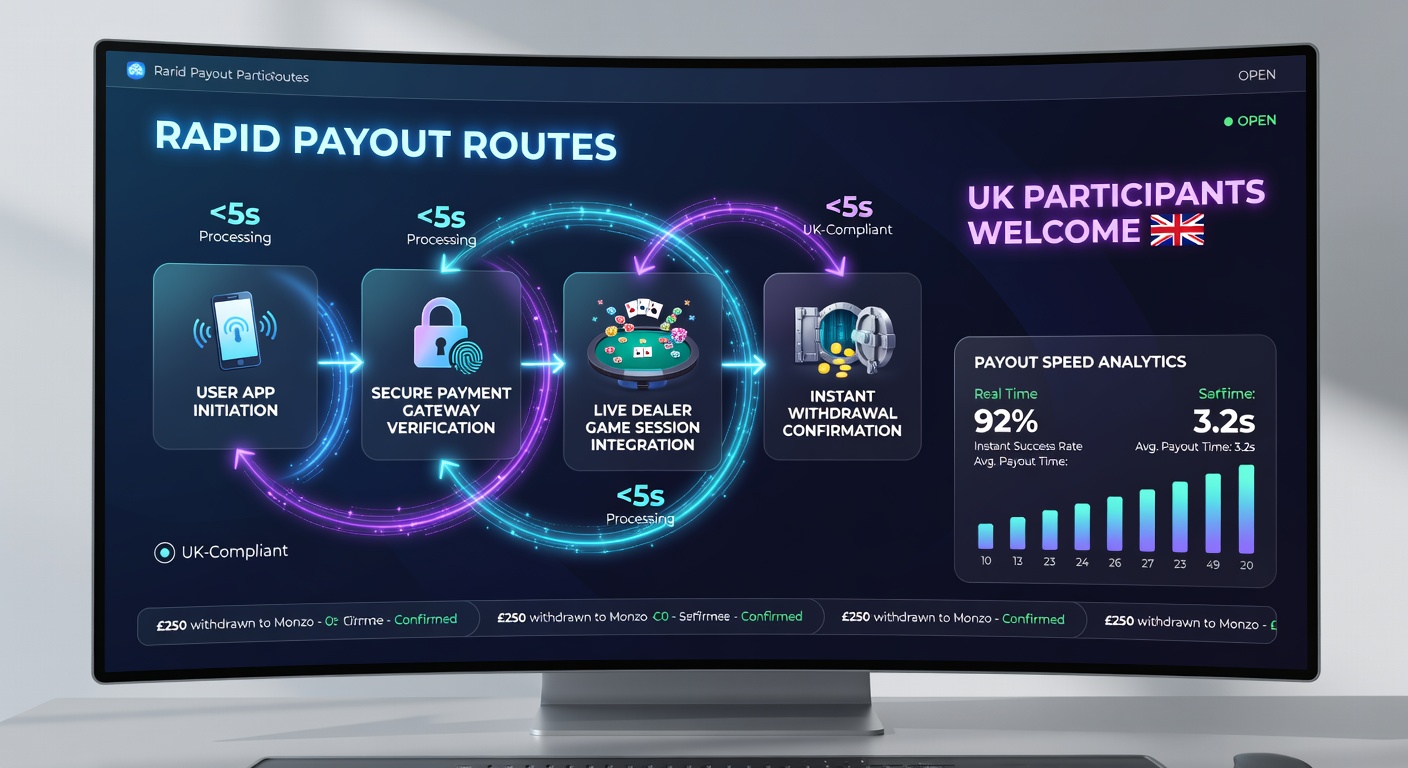
Security layers include device fingerprinting and behavioural biometrics that run continuously in the background, flagging anomalies without interrupting the live stream, and this continuous monitoring lets payout engines approve low-risk requests automatically while routing higher-value transactions to secondary review queues that still complete within the same operational day.
June 2026 Landscape and Emerging Standards
By June 2026 several major app providers had rolled out unified payout dashboards that aggregate multiple funding sources into a single view, and industry conferences held that month highlighted case studies where live dealer environments reduced average cash-out latency by integrating open banking mandates that went live earlier in the year.
These updates allow participants to select a preferred route once and have the app remember the preference across future sessions, which streamlines repeat withdrawals while maintaining full audit trails required by oversight bodies across different jurisdictions.
Comparative Performance of Payment Channels
Wallet-based transfers typically clear in under thirty seconds when the provider maintains direct settlement partnerships with UK banks, whereas card-based refunds follow a two-step authorisation and settlement cycle that can extend to several hours depending on the issuing bank, and researchers at academic institutions tracking these patterns have documented clear differences in user return rates tied to these speed variations.
Operators publish transparency reports that break down average processing times by channel and time of day, giving participants data they can use to choose the most suitable route for each withdrawal, and such disclosures have become standard practice among larger app-driven platforms serving the UK market.
Future Routing Developments
Technical roadmaps shared at recent trade events point toward greater use of blockchain settlement rails for cross-border elements of live casino payouts, although domestic UK routes continue to rely on established banking infrastructure, and analysts expect hybrid models to appear in production environments before the end of the current decade.
Testing environments already demonstrate app-level controls that let users set spending and withdrawal limits that sync across devices, ensuring that rapid payout routes remain aligned with responsible gaming parameters without adding friction to legitimate transactions.
Conclusion
The mapping of rapid payout routes within app-driven live casino environments continues to evolve through tighter integration between gaming software, payment providers and regulatory frameworks, and participants in the UK benefit from systems that balance speed with compliance through automated checks and diversified channel options, with ongoing refinements expected to further compress processing times while preserving security standards.